Energy-Saving Technologies in Portable Electronics
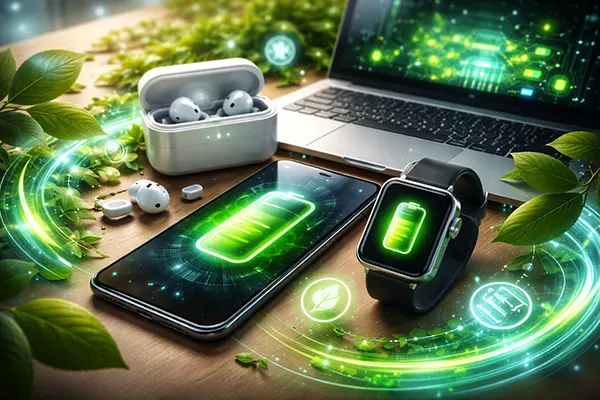
Portable electronic devices have become an essential part of everyday life, from smartphones and laptops to wearables and wireless accessories. As functionality expands and performance demands increase, energy efficiency has turned into a key engineering priority. In 2025, energy-saving technologies are no longer limited to battery capacity alone; they represent a complex interaction between hardware design, software optimisation and intelligent power management.
Advanced Battery Technologies and Energy Storage
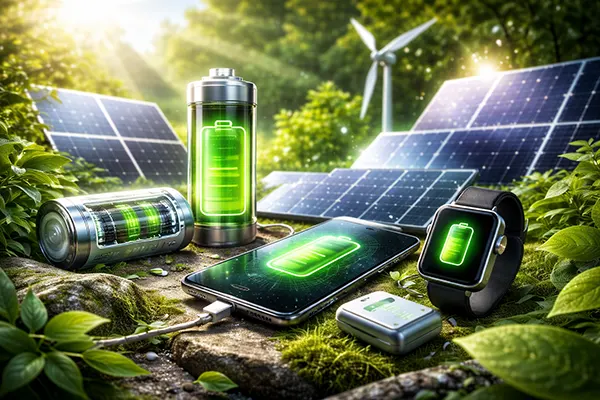
Modern portable electronics rely on significant improvements in battery chemistry to extend operating time without increasing physical size. Lithium-ion batteries remain dominant, but their internal structure has evolved. High-density anodes, improved electrolytes and better thermal stability allow devices to store more energy while reducing degradation over repeated charge cycles.
Solid-state battery research has progressed notably by 2025, especially in premium consumer electronics. These batteries replace liquid electrolytes with solid materials, improving safety and enabling higher energy density. Although mass adoption is still limited by production costs, early implementations already demonstrate longer battery life and reduced charging losses.
Another important development is adaptive charging technology. Devices now regulate charging speed and voltage based on temperature, usage patterns and battery health. This approach reduces unnecessary energy waste and extends the overall lifespan of batteries, which directly contributes to lower energy consumption over time.
Energy-Efficient Power Management Circuits
Power management integrated circuits have become more intelligent and precise. Modern chips dynamically distribute energy only to the components that are actively in use, minimising leakage and standby consumption. This is particularly relevant for devices that operate continuously, such as smartwatches and fitness trackers.
Voltage regulation systems now operate with higher efficiency across variable workloads. Instead of maintaining constant output, they adapt in real time to processor demands, display brightness and network activity. This fine-grained control reduces energy losses that previously occurred during peak or idle states.
In addition, manufacturers increasingly integrate energy monitoring sensors directly into circuit boards. These sensors provide real-time data to the operating system, enabling software-level decisions that further optimise power usage without compromising user experience.
Low-Power Processors and Hardware Optimisation
Processor efficiency plays a decisive role in the energy profile of portable electronics. In 2025, chip manufacturers focus heavily on performance-per-watt rather than raw computing power. Advanced fabrication processes, such as 3-nanometre architectures, allow more transistors to operate at lower voltages.
Heterogeneous processor designs are now standard. Devices combine high-performance cores with low-power efficiency cores, assigning tasks based on complexity. Background operations are handled by energy-efficient cores, while demanding applications activate more powerful units only when necessary.
Graphics processors and neural processing units have also been optimised for specific workloads. Instead of relying on general-purpose computing, dedicated hardware accelerates tasks such as image processing or voice recognition with significantly lower energy consumption.
Display and Component-Level Energy Savings
Displays remain one of the most energy-intensive components in portable electronics. OLED and LTPO display technologies have improved substantially, allowing dynamic refresh rates that adjust to on-screen content. Static images consume far less energy than fast-moving visuals.
Ambient light sensors and adaptive brightness algorithms now work with greater accuracy. Displays adjust not only brightness but also colour temperature and contrast, reducing power usage while maintaining readability in different environments.
Other components, including wireless modules and sensors, are designed to operate in ultra-low-power modes when idle. Bluetooth and Wi-Fi chips, for example, switch between active and sleep states within milliseconds, preventing unnecessary energy drain.
Software-Level Optimisation and Intelligent Energy Control
Software has become a critical factor in energy efficiency. Modern operating systems analyse user behaviour patterns to predict when full performance is required and when background processes can be limited. This predictive approach reduces constant high-power operation.
Application developers increasingly follow strict energy efficiency guidelines. In 2025, many operating systems provide detailed energy usage reports, encouraging developers to optimise code execution, reduce background activity and avoid unnecessary data polling.
Cloud-assisted processing also contributes to energy savings. Certain computational tasks are offloaded to remote servers when network conditions allow, reducing local processor workload and conserving battery power on the device itself.
Artificial Intelligence in Power Consumption Management
Artificial intelligence plays an important role in modern energy-saving strategies. Machine learning models analyse usage patterns, charging habits and environmental factors to optimise power allocation automatically. These adjustments happen continuously without user intervention.
AI-driven systems can identify inefficient applications or processes and limit their background activity. Over time, the system learns which functions are essential to the user and prioritises energy distribution accordingly.
By 2025, intelligent energy control has become a standard feature rather than a premium option. This shift reflects a broader industry focus on sustainable design, longer device lifespans and reduced environmental impact through smarter energy use.