Wi-Fi 7 in Home Networks: What Will Actually Change for Users?
Wireless internet has already become the centre of the modern home. Smart TVs stream 4K and 8K video, cloud gaming services compete with traditional consoles, remote work relies on stable video calls, and dozens of connected devices constantly exchange data in the background. By 2026, Wi-Fi 7 is gradually moving from premium routers into mainstream home networking equipment, promising higher speeds, lower latency, and more stable performance. However, the real question for most households is not whether Wi-Fi 7 is technically impressive, but whether it changes everyday internet use in a noticeable way. The answer depends on the type of devices at home, internet connection quality, and how heavily the wireless network is used on a daily basis.
Why Wi-Fi 7 Is Different from Previous Standards
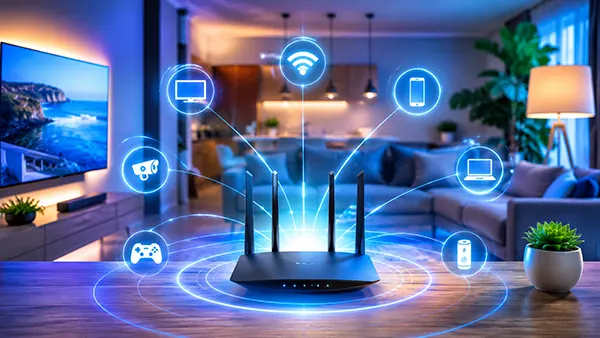
Wi-Fi 7, officially based on the IEEE 802.11be standard, improves several areas at once rather than focusing only on raw speed. Earlier generations often promoted maximum theoretical bandwidth figures that were difficult to achieve in normal homes. Wi-Fi 7 instead concentrates on reducing network congestion and improving consistency when many devices are connected simultaneously. This matters more in 2026 because households now commonly include smartphones, laptops, tablets, smart speakers, surveillance cameras, gaming systems, and IoT devices operating at the same time.
One of the key technical changes is support for 320 MHz channel bandwidth. This doubles the channel width available in Wi-Fi 6E and allows significantly faster wireless data transfer in compatible environments. In practical terms, large files can move between devices more quickly, cloud backups complete faster, and local media servers stream high-bitrate content with fewer interruptions. Users with NAS storage systems or advanced home offices are likely to notice these benefits first.
Another major improvement is Multi-Link Operation (MLO). Instead of relying on a single wireless band, Wi-Fi 7 devices can combine multiple frequencies simultaneously. A router may use both 5 GHz and 6 GHz bands together to maintain stable communication. This helps reduce lag spikes and temporary disconnections that often appear in crowded apartment buildings where neighbouring networks compete for spectrum.
How Wi-Fi 7 Handles Modern Device Demands
Home networks in 2026 carry far more traffic than they did only a few years ago. A single family may simultaneously stream video content, run video meetings, download game updates, and operate connected appliances. Earlier wireless standards could slow down noticeably under these conditions, particularly during peak evening hours when many devices requested bandwidth at once.
Wi-Fi 7 improves efficiency through enhanced OFDMA and MU-MIMO technologies. These systems allow routers to communicate with multiple devices more effectively instead of rapidly switching attention between them. In practical use, this means smoother streaming on several televisions at the same time and more responsive internet performance even when background downloads are active.
The standard also reduces latency, which is important not only for gaming but for cloud-based applications in general. Services such as GeForce NOW, Xbox Cloud Gaming, and remote desktop tools depend heavily on quick response times. Wi-Fi 7 can lower transmission delays enough to make wireless cloud gaming feel closer to a wired Ethernet connection, especially in smaller homes with strong signal coverage.
What Users Will Notice in Everyday Use
Marketing materials often focus on extremely high speed figures exceeding 40 Gbps, but most users will experience Wi-Fi 7 differently. The main advantage is not necessarily downloading files dramatically faster, since many broadband subscriptions remain below 2 Gbps in 2026. Instead, users are more likely to notice smoother network behaviour under pressure.
For example, video buffering becomes less common when several people stream content simultaneously. High-resolution video calls remain stable even while large uploads occur elsewhere on the network. Smart home systems respond faster because the router manages device communication more efficiently. These improvements create a network that feels more reliable rather than simply faster.
Another noticeable benefit appears in dense housing environments. Apartment buildings often suffer from wireless interference caused by overlapping networks. Wi-Fi 7 routers are better at handling congested radio conditions through smarter spectrum allocation and interference management. Users living in urban areas may therefore experience more stable speeds without changing their broadband provider.
Who Will Benefit Most from Upgrading
Not every household requires Wi-Fi 7 immediately. Users with modest internet usage, such as basic web browsing and occasional streaming, may see limited practical difference compared with a good Wi-Fi 6 setup. Older devices also cannot automatically gain full Wi-Fi 7 features unless their hardware supports the standard.
The biggest improvements will be seen by households with heavy network usage. Homes using 8K streaming, VR headsets, cloud gaming, local media servers, or advanced smart home systems can benefit significantly from improved bandwidth management and lower latency. Remote workers transferring large files or participating in constant video conferencing may also appreciate the increased stability.
Gamers are another important group. Although internet latency depends partly on the broadband provider, Wi-Fi 7 reduces internal wireless delays inside the home. Competitive online games become more responsive, and large updates download more efficiently when paired with high-speed fibre internet connections.

Limitations and Realistic Expectations in 2026
Despite its technical strengths, Wi-Fi 7 is not a universal solution for poor internet performance. Many problems originate outside the home network itself. Slow broadband subscriptions, overloaded ISP infrastructure, or badly positioned routers can still create frustrating experiences even with the newest wireless technology.
Cost also remains an important factor in 2026. Early Wi-Fi 7 routers were expensive, though prices are gradually falling as more manufacturers enter the market. Fully benefiting from the standard often requires multiple compatible devices, including smartphones, laptops, and network adapters. Users upgrading only the router may not immediately see dramatic changes if most household devices still operate on Wi-Fi 5 or Wi-Fi 6.
Coverage limitations continue to exist as well. The 6 GHz band used heavily by Wi-Fi 7 delivers high speeds but has shorter range and weaker wall penetration than lower frequencies. Larger homes may still require mesh systems or additional access points to maintain stable coverage throughout the property.
How Wi-Fi 7 Fits into the Future of Connected Homes
By 2026, connected homes are becoming increasingly dependent on stable wireless infrastructure. Artificial intelligence assistants, automated appliances, smart security systems, and cloud-based entertainment services all generate constant network activity. Wi-Fi 7 is designed not only for today’s bandwidth demands but also for future device growth.
The technology is particularly important for mixed environments where many device types operate together. Instead of prioritising only peak speed benchmarks, Wi-Fi 7 focuses on reducing instability and improving simultaneous communication. This reflects how households actually use wireless networks in real life.
For most users, Wi-Fi 7 represents an evolutionary rather than revolutionary change. Internet browsing will not suddenly feel unrecognisable overnight. However, homes with growing numbers of connected devices are likely to experience fewer interruptions, smoother streaming, and more reliable performance overall. As compatible hardware becomes more affordable, Wi-Fi 7 is expected to become the standard foundation for modern home networking throughout the second half of the decade.