Sodium-Ion Batteries in 2026: Where They Can Already Replace Lithium-Ion Batteries
By 2026, sodium-ion batteries have moved well beyond the stage of being an interesting laboratory alternative to lithium-ion technology. Commercial cells are being manufactured, large energy-storage installations are operating on electricity grids, and sodium-powered electric vehicles have reached customers in China. Yet this does not mean that lithium-ion batteries are about to disappear. Sodium-ion technology has a different set of strengths: it performs particularly well in cold conditions, avoids dependence on lithium, can be attractive where battery weight is less important, and may offer greater protection against swings in raw-material prices. Its main weakness remains lower energy density, which means more battery mass and volume are generally required to store the same amount of electricity. The practical picture in 2026 is therefore not one battery chemistry replacing another everywhere. Sodium-ion is already a credible replacement in several clearly defined applications, while lithium-ion remains difficult to beat in long-range electric cars, portable electronics and other products where every kilogram and centimetre of battery space matters.
Why Sodium-Ion Batteries Have Become a Practical Option in 2026
Sodium-ion batteries work in a broadly similar way to familiar rechargeable lithium-ion batteries, but they use sodium rather than lithium as the main charge-carrying element. For an ordinary buyer or energy user, the chemistry itself matters less than the consequences. Sodium is abundant and widely available, so manufacturers do not face the same direct dependence on lithium resources. This has become increasingly relevant as demand for batteries has grown across electric transport, renewable-energy storage, data centres and industrial equipment. According to the International Energy Agency, sodium-ion production was still less than 1% of lithium-ion production in 2025, which shows how early the industry remains. At the same time, major manufacturers have moved from experimental batches towards commercial-scale production during 2026, making the technology much more relevant for real purchasing decisions than it was only two or three years earlier.
The biggest physical limitation is how much energy can be stored for a given battery weight. Current high-performance sodium-ion cells can reach around 175 Wh/kg, while the latest lithium iron phosphate, or LFP, cells can reach roughly 205 Wh/kg. That difference may sound modest, but it matters when hundreds of kilograms of batteries must fit underneath a passenger car. A heavier or larger battery can affect driving range, vehicle efficiency, cabin space and production cost. The same disadvantage matters far less when batteries are installed beside a solar farm, inside a grid-storage facility or at an industrial site. A storage container does not need to travel hundreds of kilometres carrying its own battery, so sacrificing some energy density can be acceptable if the alternative offers advantages in temperature tolerance, safety, raw-material availability or long-term operating costs.
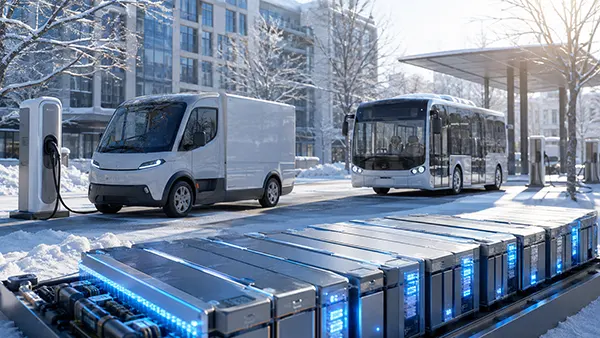
Cold-weather behaviour is one reason sodium-ion technology has attracted serious attention from vehicle and storage manufacturers. The newest commercial designs can retain a high proportion of their capacity at temperatures at which conventional LFP batteries suffer much greater losses. CATL reports that its Naxtra sodium-ion cells can retain more than 90% usable capacity at -40°C, while the International Energy Agency also identifies cold climates as one of the areas where sodium-ion technology is already economically competitive. This does not mean that every sodium-ion cell will deliver identical winter performance, because battery design, thermal management and cell chemistry differ between manufacturers. Nevertheless, the advantage is important for northern China, Scandinavia, Canada and other regions where winter conditions can increase heating requirements, reduce driving range and complicate stationary battery operation.
Why Cheap Sodium Does Not Automatically Mean a Cheap Battery
One of the most common misconceptions is that sodium-ion batteries must already be cheaper simply because sodium is abundant and inexpensive. Raw materials are only one part of a finished battery’s cost. Manufacturers also pay for cathode and anode materials, electrolytes, separators, cell casings, electronics, assembly, quality control, factory equipment, transport and warranty support. Lithium-ion manufacturing has benefited from decades of investment and enormous production volumes, while LFP factories in particular have become highly optimised. This scale has pushed prices down to levels that a younger battery chemistry cannot automatically match. A 2026 review in Nature Reviews Materials notes that current sodium-ion technology still trails established LFP systems not only in energy density but also in cost efficiency, despite its considerable longer-term economic potential.
The International Energy Agency reaches a similar assessment. Although lithium prices rose sharply between early 2025 and early 2026, they remained far below the extreme levels recorded in 2022. Under current market conditions, sodium-ion cells do not generally undercut LFP batteries across most applications. Their economics improve when other factors are included, especially operation in very cold environments or exposure to volatile lithium prices. A company running batteries at -20°C, for example, may care about heating energy, usable winter capacity and the amount of battery capacity that must be installed to guarantee a particular service. In such a case, comparing the purchase price per kilowatt-hour alone can give a misleading picture. The relevant figure is the cost of delivering the required performance throughout the battery’s working life.
Resource security also requires a more careful assessment than simply saying that sodium batteries eliminate critical minerals. They eliminate the need for lithium, and some designs reduce dependence on other constrained materials, but commercial sodium-ion chemistries can still contain metals such as nickel or manganese. Manufacturing is also highly concentrated geographically. The IEA reported in 2026 that almost all existing sodium-ion cell production capacity was located in China and that announced projects suggested China could account for more than 95% of capacity in 2030. Sodium resources themselves are geographically widespread, but the factories, specialist materials, manufacturing knowledge and supply networks needed to turn those resources into reliable cells remain concentrated. Sodium-ion therefore provides an opportunity to diversify battery supply rather than an automatic guarantee that diversification has already happened.
Where Sodium-Ion Can Already Replace Lithium-Ion Batteries
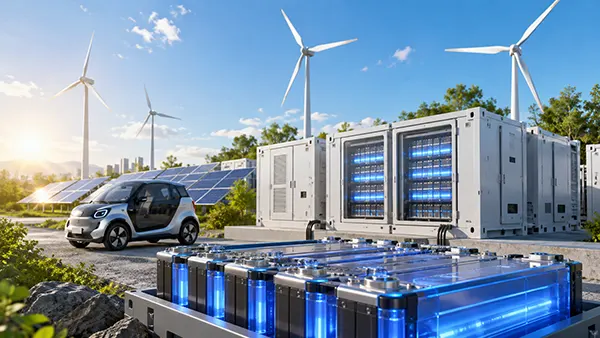
Large stationary energy-storage systems are the clearest answer in 2026. China has already demonstrated sodium-ion batteries at a scale large enough to provide genuine grid services rather than laboratory testing. In June 2024, the first phase of the Datang Hubei sodium-ion storage project entered operation with 50 MW of power and 100 MWh of energy capacity. The complete project was designed for 100 MW/200 MWh. The operating first phase contains enough stored electricity for a single full charge to hold about 100,000 kWh. Its functions include shifting electricity from low-demand periods to peak hours, helping balance renewable generation and providing services that support grid stability. These are precisely the jobs currently performed by large numbers of LFP storage systems, making this a genuine example of sodium-ion technology taking on work normally assigned to lithium-ion batteries.
Compact electric vehicles are another area where replacement is possible, although commercial availability remains far narrower than for conventional lithium-ion EVs. JAC began delivering a sodium-ion version of its small Yiwei electric car in China in January 2024. Its 23.2 kWh battery provided a claimed CLTC driving range of about 230 kilometres. That is modest by the standards of long-distance electric cars but entirely usable for many urban journeys, local deliveries and daily commuting. In this part of the market, adding battery capacity for a 500- or 600-kilometre range may simply increase cost and weight without providing much everyday value. The IEA consequently identifies short-range cars, urban light commercial vehicles, two- and three-wheelers and industrial vehicles such as forklifts among the applications particularly well suited to sodium-ion technology.
Cold-climate transport could become an even more important niche because it changes the usual trade-off between energy density and usable range. A lithium-ion pack with a higher headline capacity is not necessarily superior if a substantial part of that capacity becomes difficult to use during severe winter conditions or if considerable energy must be spent warming the battery. CATL and Changan increased the commercial significance of this idea in February 2026 when they presented a new passenger vehicle designed around CATL’s Naxtra sodium-ion technology. CATL has stated that Naxtra reaches up to 175 Wh/kg and is intended for broader passenger-vehicle deployment. However, the distinction between a production-ready vehicle and a mature mass market remains important: CATL said in April that full-scale Naxtra mass production was scheduled for the end of 2026. Sodium-ion is therefore already viable for selected vehicles, but lithium-ion still dominates overall EV production.
Stationary Storage Is the Strongest Commercial Case Today
Stationary storage removes the most serious disadvantage of sodium-ion batteries: lower energy density. Grid operators are generally more concerned with the price of the complete storage installation, usable capacity, safety, cycle life, efficiency, temperature control and reliability than with whether a battery container weighs several tonnes more or occupies somewhat more ground. This makes fixed storage a natural early market. The Datang Hubei project is particularly significant because its 100 MWh first phase is not simply an experimental cabinet connected to a research facility. It is a working grid installation designed to charge and discharge more than 300 times per year and to help shift electricity between periods of different demand. HiNa Battery cells have also been used in a 40 MWh sodium-ion section of a 200 MW/400 MWh hybrid lithium-sodium storage station in Yunnan that reached full-capacity grid connection in March 2025.
The next step is the move from individual demonstration projects to repeatable commercial orders. CATL presented its TENER Sodium energy-storage system in June 2026 and described its sodium-ion manufacturing lines as commissioned and ready for large-scale deployment. Chinese customer deliveries are scheduled to begin in September 2026, with cumulative shipments targeted at 1 GWh by the end of the year. More importantly for longer-term scale, CATL and storage-system specialist HyperStrong signed a three-year agreement covering 60 GWh of sodium-ion battery supply in April 2026. An order does not equal completed deployment, and announced capacity should never be treated as batteries already installed in the field. Even so, contracts measured in tens of gigawatt-hours indicate that manufacturers and storage integrators are now planning sodium-ion projects as commercial infrastructure rather than isolated experiments.
Europe is earlier in the adoption cycle, but practical activity is no longer confined to announcements. HiNa Battery reported delivering a 1.1 MWh sodium-ion battery cluster to a German energy company in 2025. In July 2026, CATL and Dutch energy company Alfen announced an agreement covering 5 GWh of sodium-ion storage systems for Europe, while CATL and Solarpro announced another agreement covering 2 GWh for projects in Central and Eastern Europe. These figures should be interpreted carefully because most of the capacity has not yet been installed. CATL has said international deliveries of its TENER Sodium system are scheduled to begin in June 2027. For a European business choosing batteries in 2026, LFP therefore remains much easier to procure at large scale. For new projects being designed for the following years, however, sodium-ion has become a credible option worth evaluating rather than a speculative future technology.
Where Lithium-Ion Batteries Still Have a Clear Advantage
Long-range passenger cars remain one of the strongest areas for lithium-ion technology. Drivers purchasing larger family cars, premium EVs or vehicles intended for frequent motorway journeys often want several hundred kilometres of dependable range without making the battery unnecessarily large or heavy. Higher energy density gives lithium-ion a direct advantage in these vehicles. The difference becomes even more important in applications such as laptops, smartphones, power tools, drones and other portable equipment, where manufacturers compete for thinner designs and lower weight. Sodium-ion batteries may eventually improve enough to enter some of these markets, but there is little reason in 2026 to replace an established lithium-ion cell with a larger sodium-ion alternative when compactness is a major product requirement.
Lithium-ion also benefits from an industrial advantage that cannot be measured in Wh/kg: an enormous existing manufacturing and service network. LFP batteries accounted for more than half of global EV battery deployment in 2025, while sodium-ion production remained tiny by comparison. Manufacturers already have qualified suppliers, established factories, vehicle designs, software, warranty data and years of field experience built around lithium-ion cells. Storage developers can obtain LFP systems from numerous established suppliers, financiers understand their performance, and operators have accumulated large amounts of real-world data. A new battery chemistry must compete with this whole commercial system, not only with the price of lithium. That is one reason technically promising batteries can take years to gain meaningful market share even after they have demonstrated acceptable performance.
Safety should not be treated as a simple reason to replace every lithium-ion battery either. Sodium-ion technology can offer attractive thermal characteristics, and CATL’s Naxtra became the first sodium-ion battery certified under China’s updated GB 38031-2025 electric-vehicle traction-battery safety requirements before the rules took effect in July 2026. That is meaningful evidence that modern sodium-ion packs can meet demanding vehicle safety standards. It is not evidence that every sodium-ion battery is inherently safe under every condition, just as lithium-ion safety varies substantially between cell chemistries, pack designs and manufacturers. Buyers still need appropriate battery-management electronics, physical protection, thermal control, testing and installation standards. Chemistry is one part of battery safety, not a substitute for good engineering and quality control.
What the Rest of 2026 Tells Us About the Next Stage of Adoption
The most important change during 2026 is scale rather than a single dramatic technical breakthrough. Sodium-ion batteries have already proved that they can run grid installations and power road vehicles. The question is now whether manufacturers can build them consistently, cheaply and in sufficient numbers to compete with highly optimised lithium-ion production. CATL’s plan to move Naxtra into full-scale production by the end of 2026, its planned Chinese sodium-storage deliveries from September, HiNa’s commercial activity and the growing number of gigawatt-hour supply agreements all point towards a much larger market. Nevertheless, production targets, signed agreements and factory nameplate capacity should be separated from actual output. The history of battery manufacturing shows that ramping a factory to stable high-volume production can take considerable time, particularly when a chemistry has not yet benefited from decades of manufacturing refinement.
Future prices will also depend heavily on what happens to lithium. Sodium-ion is often presented as the inevitable low-cost winner, but the market in 2026 shows why that assumption is unreliable. Lithium prices at the beginning of the year were more than twice their level a year earlier, yet the IEA noted that they remained roughly 70% below their 2022 peak. If lithium remains readily available and LFP manufacturers continue producing inexpensive cells at enormous scale, sodium-ion will have to win business through a combination of performance, supply security and manufacturing improvements rather than cheap sodium alone. If lithium prices rise substantially or supply becomes disrupted, sodium-ion factories provide manufacturers with an alternative that does not depend on the same raw material. In that sense, the value of sodium-ion is partly similar to an insurance policy for an industry whose demand for batteries continues to expand rapidly.
For practical decisions in 2026, the boundary is therefore becoming fairly clear. Large stationary storage is the strongest existing replacement market, especially where land and battery weight are not major constraints. Short-range electric vehicles and selected fleet applications can already use sodium-ion successfully, with cold regions offering an especially favourable case. Hybrid battery packs combining sodium-ion and lithium-ion cells may also use each chemistry for what it does best rather than forcing one to replace the other completely. Long-range EVs, compact consumer electronics and products requiring maximum energy from minimum weight still favour lithium-ion. Sodium-ion is consequently becoming a second major rechargeable-battery option rather than a universal successor. Its most important contribution may be giving manufacturers and energy users a genuine choice of chemistry based on climate, range, space, raw-material risk and operating cost instead of relying on lithium-ion for almost every rechargeable-energy application.