Hydrogen Energy Storage for Industry and Transport in 2026
Hydrogen energy storage has moved from pilot discussions to practical deployment across Europe, Asia and parts of the Middle East. In 2026, it is no longer viewed solely as a future fuel but as a strategic tool for balancing renewable electricity, decarbonising heavy industry and supporting low-carbon transport. Governments are refining hydrogen strategies, large-scale electrolysers are operating at hundreds of megawatts, and industrial users are signing long-term offtake agreements. The key question is not whether hydrogen can store energy, but where it delivers measurable value compared with batteries, synthetic fuels and direct electrification.
Hydrogen as a Long-Duration Energy Storage Medium
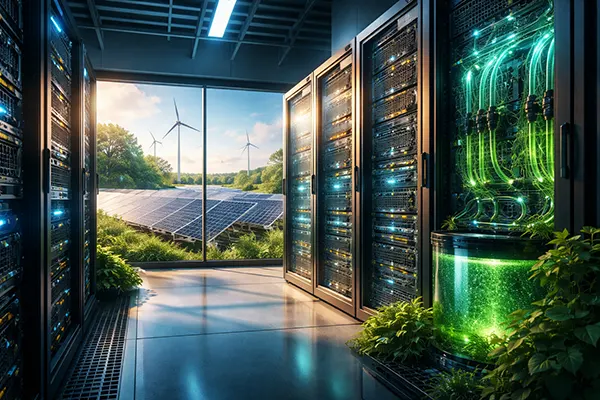
Hydrogen is primarily used to store surplus electricity generated from renewable sources such as wind and solar. When production exceeds grid demand, electricity powers electrolysers that split water into hydrogen and oxygen. The hydrogen can then be compressed, liquefied or converted into derivatives such as ammonia or methanol. Unlike batteries, which are typically optimised for short to medium durations, hydrogen can store energy for weeks or even seasons, making it particularly relevant in regions with strong seasonal renewable variation.
In 2026, commercial electrolysers based on proton exchange membrane (PEM) and alkaline technologies are widely deployed, with solid oxide electrolysis gaining ground for high-temperature industrial integration. The cost of green hydrogen has decreased in regions with abundant renewables, particularly where solar and wind capacity factors are high. However, it still depends heavily on electricity pricing and grid infrastructure. Where renewable power costs fall below €30/MWh, green hydrogen production becomes increasingly competitive for industrial feedstock and long-duration storage.
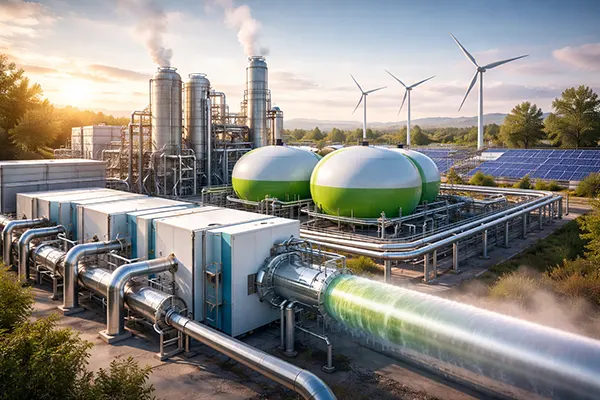
Hydrogen storage itself relies on multiple technical solutions. Compressed gas storage in above-ground tanks is common for industrial sites, while underground salt caverns are emerging as a scalable option for national energy reserves. Countries such as Germany, the Netherlands and the UK are repurposing existing gas infrastructure to test hydrogen blending and dedicated pipelines. These developments highlight hydrogen’s role not just as a fuel, but as an energy system buffer.
Efficiency, Losses and System Integration
The round-trip efficiency of hydrogen storage remains lower than that of lithium-ion batteries. Converting electricity to hydrogen via electrolysis, then back to electricity through fuel cells or turbines, typically results in overall efficiencies between 30% and 45%. This is a structural limitation due to conversion losses at each stage. As a result, hydrogen is rarely the preferred solution for short-term balancing where batteries can deliver 80% or higher efficiency.
However, system design in 2026 increasingly focuses on using hydrogen directly rather than reconverting it to electricity. Industrial furnaces, chemical plants and heavy vehicles can consume hydrogen without intermediate steps. This avoids additional efficiency penalties and improves overall economics. Integrated industrial clusters, where renewable power, electrolysers and hydrogen consumers are co-located, show the most promising results.
Grid operators are also studying hydrogen’s contribution to energy security. In scenarios with prolonged low wind output, stored hydrogen can power gas turbines adapted for high hydrogen blends. Manufacturers such as Siemens Energy and GE Vernova are developing turbines capable of operating on 100% hydrogen, although full commercial deployment remains in progress.
Industrial Applications: Steel, Chemicals and Refineries
Heavy industry accounts for a substantial share of global carbon emissions, and hydrogen provides one of the few viable pathways to deep decarbonisation in certain sectors. In steelmaking, direct reduced iron (DRI) processes using hydrogen instead of coal are operating at commercial scale in Sweden and Germany. By 2026, several European plants have begun partial conversion, supported by long-term renewable power contracts.
The chemical industry has long relied on hydrogen derived from natural gas for ammonia and methanol production. The transition to green hydrogen reduces process emissions significantly, particularly in fertiliser manufacturing. Several large ammonia facilities in the Middle East and Australia now export low-carbon ammonia to Asian and European markets, where it is used both as fertiliser feedstock and as a hydrogen carrier.
Refineries are also integrating low-carbon hydrogen into hydrocracking and desulphurisation processes. While total refinery output may decline in regions with aggressive electrification policies, hydrogen demand within remaining facilities is shifting towards greener sources. Policy instruments such as carbon pricing and contracts for difference play a decisive role in bridging the cost gap.
Infrastructure and Investment Realities
Industrial hydrogen deployment requires more than electrolysers. Dedicated pipelines, compression systems, storage facilities and safety upgrades are essential. In 2026, several hydrogen backbone projects in Europe are under construction, aiming to connect industrial clusters across borders. These networks often repurpose existing natural gas pipelines, reducing capital expenditure compared with entirely new builds.
Financing remains a critical factor. Large hydrogen projects frequently depend on state aid, green investment funds and long-term purchase agreements. Investors evaluate not only technology risk but also regulatory stability. Where governments provide clear roadmaps and carbon pricing signals, private capital participation increases significantly.
Safety standards have evolved alongside deployment. Hydrogen’s low ignition energy and high diffusivity require strict engineering controls, including leak detection systems and ventilation protocols. International standards bodies have updated guidelines to reflect higher operational pressures and broader industrial use.
Hydrogen in Heavy Transport and Mobility
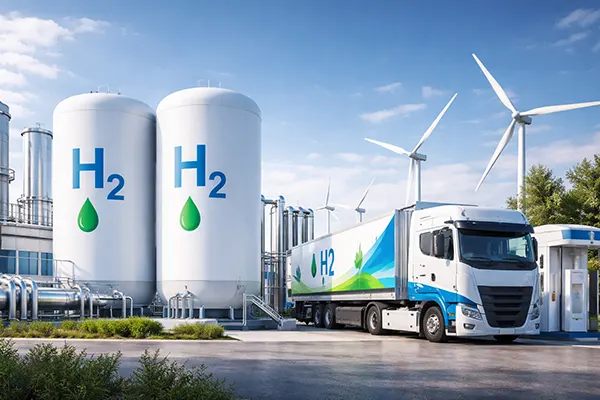
Transport applications focus primarily on segments where battery solutions face weight or range limitations. In 2026, hydrogen fuel cell buses and trucks operate in multiple European and Asian cities, particularly for long-distance freight and high-utilisation fleets. Refuelling times are shorter than battery charging for comparable range, which supports commercial logistics operations.
Rail transport in non-electrified regions has adopted hydrogen trains as an alternative to diesel. Germany and France continue to expand pilot lines, although full lifecycle costs remain under evaluation. Aviation and maritime sectors are exploring hydrogen derivatives such as synthetic fuels and ammonia rather than pure hydrogen due to storage density constraints.
Passenger cars powered by hydrogen fuel cells remain a niche market. Limited refuelling infrastructure and high vehicle costs restrict widespread adoption. Instead, hydrogen’s comparative advantage lies in heavy-duty and industrial transport applications, where operational profiles align better with its technical characteristics.
Comparative Outlook: Hydrogen vs Electrification
Direct electrification remains the most energy-efficient solution wherever feasible. For light vehicles, residential heating and many industrial processes, electric technologies outperform hydrogen in cost and efficiency terms. The strategic role of hydrogen is therefore selective rather than universal.
In heavy industry, long-distance freight and seasonal energy storage, hydrogen provides flexibility that batteries cannot easily match. Policymakers in 2026 increasingly adopt a “sector-by-sector” approach, identifying where hydrogen adds system value rather than promoting it as a universal replacement.
The long-term trajectory depends on continued cost reductions in electrolysis, renewable electricity expansion and infrastructure coordination. If these elements align, hydrogen will consolidate its position as a complementary pillar of the low-carbon energy system rather than a competitor to electrification.