Biometric Identification Without Storing Faces: How Privacy-First Identity Verification Protects Users
Biometric authentication has become a common part of everyday digital life, from unlocking smartphones to accessing banking services and corporate systems. However, traditional facial recognition technologies often rely on storing facial images or detailed biometric templates in central databases, creating significant privacy and security concerns. As regulations become stricter and public awareness of data protection grows, privacy-first biometric identification has emerged as an alternative approach. Instead of collecting and retaining facial photographs, these systems verify identity while minimising the amount of personal data processed and stored.
Why Traditional Facial Recognition Raises Privacy Concerns
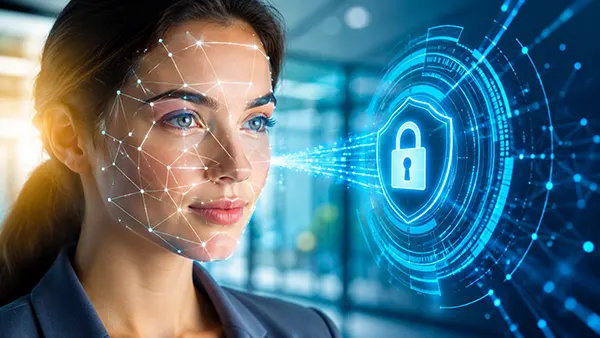
Conventional facial recognition systems usually analyse facial characteristics and convert them into mathematical representations that can later be compared against stored records. While these methods can provide efficient authentication, they also create attractive targets for cybercriminals because biometric data cannot be changed like a password.
Large biometric databases introduce additional risks. If a database containing facial information is compromised, affected individuals may face long-term privacy consequences. Unlike usernames or access codes, a person’s face remains permanent, making recovery from a data breach particularly challenging.
Another concern involves excessive data collection. Many organisations historically gathered more information than was necessary for identity verification. This practice has attracted attention from regulators across Europe, North America, and other regions that increasingly require businesses to demonstrate clear justification for processing biometric data.
How Data Protection Laws Influence Biometric Technologies
The General Data Protection Regulation (GDPR) treats biometric information as a special category of personal data, requiring organisations to apply stricter safeguards. Companies must demonstrate lawful grounds for processing such information and implement measures that reduce unnecessary collection.
Regulators are also placing greater emphasis on transparency. Users are increasingly expected to receive clear explanations regarding how their biometric information is processed, how long it is retained, and whether it is shared with third parties.
As a result, technology providers are investing in privacy-preserving identity verification methods that support compliance while still delivering secure authentication. These approaches reduce legal exposure and help organisations maintain user trust.
How Privacy-First Biometric Identification Works
Privacy-first biometric systems are designed around the principle of data minimisation. Instead of storing facial photographs in central repositories, many solutions generate encrypted mathematical tokens that cannot easily be reconstructed into original facial images.
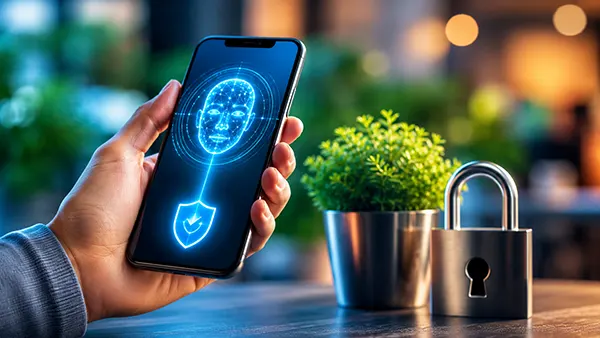
Some modern architectures perform biometric matching directly on a user’s device. In these cases, facial data never leaves the smartphone, tablet, or computer. The system simply confirms whether authentication was successful without transmitting sensitive biometric information to external servers.
Advanced cryptographic techniques further strengthen protection. Technologies such as zero-knowledge proofs, secure enclaves, and privacy-preserving computation allow systems to validate identity while revealing as little personal information as possible during the verification process.
Device-Based Authentication and Decentralised Verification
Device-based authentication has become increasingly common because it reduces dependency on central databases. Biometric information remains under the user’s control, significantly limiting the impact of large-scale data breaches.
Decentralised identity frameworks are also gaining attention. These models allow individuals to manage verified credentials through digital wallets and present proof of identity without exposing excessive personal information. Only the required verification result is shared.
Combined with hardware security modules integrated into modern devices, these approaches provide strong resistance against unauthorised access while supporting privacy expectations demanded by regulators and consumers.
Benefits and Future Applications of Privacy-First Biometrics
One of the primary advantages of privacy-first identification is enhanced user confidence. People are generally more willing to adopt biometric authentication when they know that facial images are not being permanently stored in large databases.
Organisations also benefit from reduced compliance burdens. Collecting less personal information lowers regulatory risks and decreases the complexity of data governance programmes. This can simplify security management while maintaining high authentication standards.
From a cybersecurity perspective, limiting stored biometric information reduces the potential value of a successful attack. Threat actors have fewer opportunities to obtain sensitive identity data, strengthening overall resilience.
The Future of Secure Digital Identity
By 2026, privacy-enhancing technologies are becoming an important component of digital identity strategies across banking, healthcare, government services, and enterprise security. Organisations increasingly recognise that strong authentication and privacy protection can coexist.
Artificial intelligence is also improving biometric verification accuracy while supporting privacy-focused architectures. New systems can detect fraud attempts, deepfakes, and presentation attacks without requiring extensive storage of personal information.
As digital services continue to expand, privacy-first biometric identification is likely to play a central role in future authentication frameworks. By reducing data collection and prioritising user control, these solutions offer a practical path towards secure and trustworthy digital identity verification.