Why Edge Computing Is Becoming Critical for Healthcare, Transport and Industry
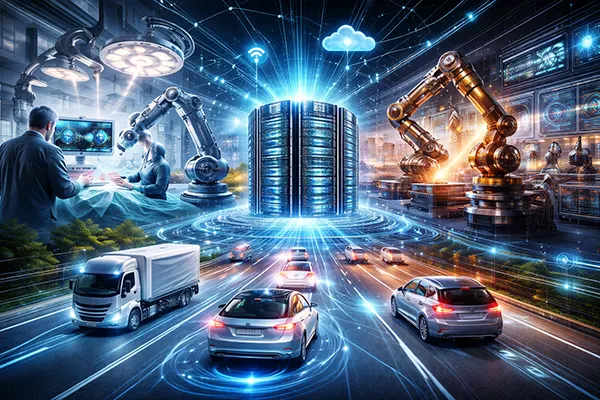
Edge computing is rapidly moving from a niche concept to a core technological foundation across multiple sectors. By processing data closer to where it is generated, organisations reduce latency, improve reliability and enhance data security. In 2026, this approach is no longer optional in areas where milliseconds matter and where decisions must be made instantly, such as in hospitals, transport systems and industrial environments.
Edge Computing in Healthcare: Real-Time Decisions and Data Security
Healthcare systems increasingly rely on connected devices, from wearable monitors to advanced imaging equipment. These tools generate massive volumes of sensitive data that must be processed quickly and securely. Edge computing allows hospitals to analyse patient data locally, reducing reliance on central servers and enabling faster clinical decisions.
In critical care environments, delays of even a few seconds can affect outcomes. Edge-enabled systems can detect anomalies in vital signs in real time and alert medical staff immediately. This is particularly important in intensive care units and remote monitoring scenarios, where patients may not be physically present in a hospital.
Another key factor is data protection. Regulations such as GDPR require strict control over patient information. By keeping data processing closer to the source, healthcare providers minimise exposure risks associated with cloud transmission, ensuring higher levels of compliance and trust.
Medical Devices and Remote Monitoring Systems
Modern medical devices are no longer isolated units; they are part of interconnected ecosystems. Edge computing enables these devices to process and filter data before transmitting only relevant insights, reducing network load and improving efficiency.
Remote patient monitoring has expanded significantly since the early 2020s. Edge technologies allow continuous health tracking with immediate feedback, making it possible to detect early warning signs of conditions such as cardiac issues or respiratory problems.
In rural or low-connectivity areas, edge computing ensures that essential healthcare services remain functional even with limited internet access. This resilience is crucial for maintaining consistent care standards regardless of location.
Transport Systems: Reducing Latency for Safety and Efficiency
Transport infrastructure is undergoing a major transformation with the rise of autonomous vehicles, smart traffic systems and connected logistics networks. These systems depend on real-time data processing, which cannot rely solely on distant data centres.
Edge computing allows vehicles and infrastructure to process data locally, enabling immediate responses to changing conditions. For example, autonomous cars use edge systems to analyse sensor data and make driving decisions in milliseconds, significantly improving safety.
Public transport networks also benefit from edge technology. Real-time monitoring of passenger flow, vehicle performance and route conditions helps operators optimise schedules and reduce delays, creating more efficient urban mobility systems.
Autonomous Vehicles and Smart Traffic Management
Autonomous vehicles generate vast amounts of data from cameras, radar and LiDAR systems. Processing this data at the edge ensures rapid decision-making without relying on cloud connectivity, which may introduce delays.
Smart traffic management systems use edge nodes placed at intersections to analyse traffic patterns and adjust signals dynamically. This reduces congestion and improves fuel efficiency across urban areas.
Logistics companies are also integrating edge solutions to track shipments in real time, optimise routes and manage fleets more effectively. This leads to cost savings and more reliable delivery times.

Industrial Applications: Reliability and Operational Continuity
In industrial environments, downtime can lead to significant financial losses. Edge computing supports real-time monitoring and predictive maintenance, allowing companies to detect equipment failures before they occur.
Factories increasingly use sensors and IoT devices to monitor production processes. Edge systems process this data locally, enabling immediate adjustments and reducing dependence on centralised systems that may introduce delays.
Another advantage is operational resilience. Edge computing ensures that critical systems continue to function even if connectivity to central servers is disrupted, which is essential for maintaining production continuity.
Smart Manufacturing and Predictive Maintenance
Smart manufacturing relies on continuous data analysis to optimise production lines. Edge computing enables rapid processing of sensor data, allowing manufacturers to adjust operations in real time and improve efficiency.
Predictive maintenance is one of the most valuable applications. By analysing equipment behaviour locally, edge systems can identify early signs of wear and schedule maintenance before breakdowns occur.
Energy management is another area where edge computing plays a key role. Industrial facilities can monitor energy usage in real time and make immediate adjustments, reducing costs and supporting sustainability goals.