Smart Roads 2026: How Highway Sensors Help Manage Traffic
Road infrastructure in 2026 is changing faster than at any point in the last two decades. Governments across Europe, Asia and North America are investing in intelligent transport systems capable of analysing traffic conditions in real time and responding to incidents before they become major disruptions. Modern highways now include connected cameras, radar systems, AI-driven traffic control centres and embedded road sensors that constantly exchange information with nearby infrastructure. These technologies are helping reduce congestion, improve emergency response times and support the growing number of electric and semi-autonomous vehicles travelling on public roads.
How Smart Highway Sensors Collect and Process Traffic Data
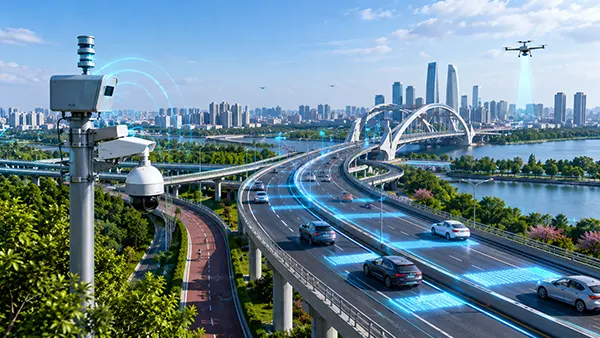
Modern traffic management begins with data collection. In 2026, highways increasingly rely on a combination of LiDAR sensors, induction loops, thermal cameras and roadside radar units to monitor vehicle movement with high precision. Unlike older systems that only counted vehicles at fixed checkpoints, new sensor networks track speed variations, braking patterns, lane changes and traffic density across long stretches of road. This information is transmitted to regional traffic control centres within seconds.
Artificial intelligence plays a major role in interpreting traffic data. Instead of operators manually reviewing road conditions, machine-learning systems identify unusual driving behaviour, sudden slowdowns or potential collisions automatically. Several European motorway projects now use predictive traffic algorithms capable of forecasting congestion up to thirty minutes before it forms. This allows traffic operators to adjust speed limits dynamically and redirect vehicles to alternative routes before bottlenecks appear.
Edge computing has also become essential for modern smart roads. Rather than sending every data point to cloud servers, many roadside devices process information locally. This reduces latency and allows traffic systems to react almost instantly to dangerous situations. In countries such as Germany, the Netherlands and South Korea, edge-based traffic systems are already reducing response times for accidents and hazardous weather conditions.
The Role of Embedded Road Sensors in Everyday Traffic Control
Embedded road sensors are now common on newly constructed motorways and urban express routes. These devices are installed beneath asphalt surfaces and measure tyre pressure impact, vehicle weight, road temperature and vibration levels. In colder climates, temperature sensors help identify ice formation before drivers can see visible danger signs. Automated warning systems then activate electronic road displays and notify connected navigation services.
Weight-monitoring sensors are increasingly important for freight transport management. Overloaded lorries create long-term structural damage to roads and bridges, leading to expensive maintenance costs. Smart highways can now detect excessive axle loads automatically and alert transport authorities in real time. Several Scandinavian countries already use these systems to reduce infrastructure wear on major commercial transport corridors.
Road condition monitoring has become another practical application. Sensors can identify surface deterioration, pothole development and drainage problems without requiring manual inspection teams. Municipal road agencies in the UK and France have started integrating predictive maintenance systems that schedule repairs before visible damage becomes severe. This approach lowers maintenance costs while improving road safety for drivers.
How Intelligent Traffic Systems Reduce Congestion in Major Cities
Traffic congestion remains one of the largest economic and environmental challenges for modern cities. Intelligent transport systems in 2026 focus heavily on reducing idle traffic time through adaptive signal control and coordinated traffic flow analysis. Unlike traditional traffic lights operating on fixed schedules, AI-controlled intersections respond dynamically to current road conditions. Sensors detect traffic volumes and adjust signal timing continuously throughout the day.
Connected navigation systems have also become deeply integrated with public infrastructure. Vehicles equipped with internet-connected infotainment systems now receive live traffic optimisation updates directly from road authorities. Drivers are rerouted around collisions, construction zones and overloaded junctions automatically. In cities such as Singapore and Copenhagen, this coordination has significantly reduced average commuting times during peak hours.
Public transport integration is another major improvement. Smart roads increasingly prioritise buses, emergency vehicles and trams using vehicle-to-infrastructure communication systems. Traffic signals can identify approaching public transport vehicles and temporarily adjust traffic flow to reduce delays. This helps improve timetable reliability while encouraging greater use of public transport in densely populated areas.
Why Real-Time Communication Between Vehicles and Roads Matters
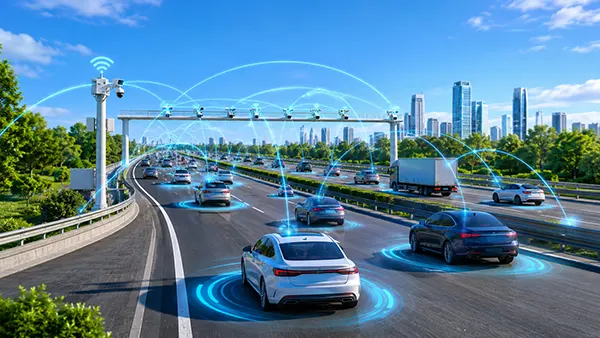
Vehicle-to-infrastructure communication, often called V2I technology, has become a critical part of intelligent transport networks. Cars can now exchange information directly with roadside equipment, including speed advisories, accident alerts and weather warnings. This communication happens in milliseconds and helps drivers react more safely to changing conditions.
Autonomous driving systems depend heavily on this type of infrastructure support. Although fully self-driving vehicles are still limited in many regions, advanced driver assistance systems already rely on external road information. Smart highways can provide warnings about hidden traffic congestion, sharp braking events beyond visibility range or lane closures several kilometres ahead.
Cybersecurity has become a serious focus within these connected transport systems. As roads and vehicles exchange increasing amounts of data, governments are introducing stricter encryption standards and infrastructure protection requirements. European Union transport agencies in 2026 now require critical smart-road systems to follow advanced cybersecurity certification frameworks to reduce risks associated with network attacks.
How Smart Roads Support Safer and More Sustainable Transport
Road safety improvements remain one of the strongest arguments for intelligent transport infrastructure. Smart roads help identify dangerous behaviour such as sudden lane drifting, excessive speeding and abrupt braking patterns. In many cases, automated systems can notify emergency services immediately after a collision occurs, even before drivers contact authorities themselves. Faster emergency response often reduces the severity of injuries during motorway accidents.
Sustainability goals are also driving investment into smart infrastructure. Traffic congestion increases fuel consumption and greenhouse gas emissions significantly. By maintaining smoother traffic flow and reducing stop-start driving patterns, intelligent highways contribute to lower vehicle emissions. Several European smart-road projects have already demonstrated measurable reductions in carbon emissions during peak traffic periods.
Electric vehicle integration is becoming another priority area. Smart charging corridors installed along highways allow electric vehicles to access real-time charging availability data. Some pilot projects in Sweden and Italy are even testing dynamic charging systems embedded directly beneath road surfaces. These technologies may eventually reduce charging stops and improve long-distance EV travel efficiency.
The Future of Smart Roads Beyond 2026
Future highway systems are expected to become increasingly autonomous and interconnected. Researchers are currently developing digital twin technology capable of creating live virtual models of entire motorway networks. These systems simulate traffic behaviour continuously and help authorities predict disruptions before they occur.
Climate resilience is also influencing future road design. Smart highways are beginning to incorporate flood monitoring systems, heat-resistant materials and automated weather response mechanisms. In regions affected by extreme temperatures or heavy rainfall, sensor-driven infrastructure can improve transport reliability during severe weather events.
Investment in intelligent transport infrastructure is likely to continue expanding throughout the next decade. Governments are under growing pressure to improve mobility while reducing emissions and road fatalities. Smart roads alone will not eliminate traffic problems entirely, but by combining sensors, AI analytics and connected vehicle systems, transport authorities are building road networks that respond faster, operate more efficiently and provide safer travel conditions for millions of drivers every day.